Non-Alcoholic Beer: The Sustainable Consumption Trend and Global Beverage Industry Shift
Explore why non-alcoholic beer has become a global market bright spot as young consumers prioritize health and wellness.
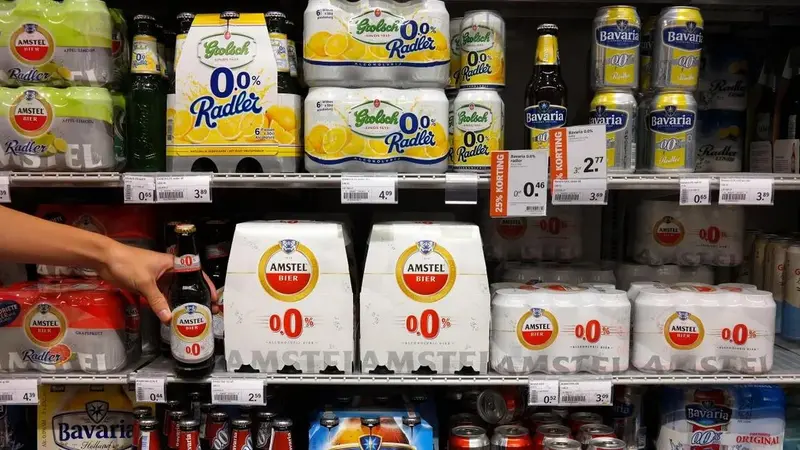
Amidst the challenges faced by the traditional brewing industry, non-alcoholic beer is emerging as a bright spot. While this segment currently accounts for over 6% of the global beer market, a consistent growth rate of 6% to 17% annually over the past five years signals a clear shift in consumer behavior.
The brewing industry faces a paradox: the need for social connection remains, while the demand for alcohol consumption is declining. According to Statista Market Insights, non-alcoholic beer is becoming a priority strategy for many producers. Heineken recently stated in its annual report that consumers are seeking nutritious, delicious adult beverages with low or zero alcohol for all occasions. Global sales of non-alcoholic beer are projected to reach $49 billion by 2030, nearly doubling from 2021. In Europe, production of beer with under 0.5% ABV and non-alcoholic variants reached 2.1 billion liters, representing 6% of total beer output.
Notably, the market is expanding significantly in key regions. In Spain, non-alcoholic beer sales in 2025 hit a record 3.3 million hectoliters, accounting for 14% of total domestic beer consumption. Meanwhile, a survey by The Drinks Business in the UK found that 60% of consumers consider non-alcoholic beer to be of equal quality to traditional brews. Thanks to advanced methods such as reverse osmosis, vacuum distillation, and specialized yeast strains, the off-flavors of raw grains are removed, providing a superior taste experience.
Expert beer taster Anikó Lehtinen notes that restaurants and supermarkets now allocate better shelf space for this segment. Mitch Adams, director at Craft Locals, confirms that non-alcoholic brands like Budvar Nealko are becoming a standard request in bars, contributing 3.6% to draft beer revenue at his venues.
This trend is global, particularly in the US and South Korea. In the US, retail sales reached $583 million, driven by the 18-25 age demographic. In South Korea, according to The Korea Times, 56% of young adults aged 19-29 now prioritize non-alcoholic or low-sugar beverages, reflecting a trend toward controlled daily alcohol intake.
A study published in the Journal of Agricultural and Food Chemistry indicates that non-alcoholic lager provides nearly 59% of the recommended daily intake of vitamin B6, significantly higher than regular lager. However, Dr. Sonya Angelone (San Francisco) cautions that while these drinks are lower in calories, they should not be viewed as complete nutritional supplements due to their lack of protein and fiber.
Experts also warn about labeling accuracy. Studies have found that approximately 30% of non-alcoholic products contain higher alcohol levels than stated on the label. Therefore, pregnant women and those with liver conditions should exercise particular caution.