Guidelines for Building a Scientific Nutritional Diet for Preschool and Primary School Children
A comprehensive guide to building a balanced and nutritious diet for children aged 3-11, ensuring optimal physical development and health.

Reasonable nutrition plays a fundamental role in supporting growth and maintaining health in children. Building a balanced, diverse diet is essential for parents and schools. Children aged 3-5 require approximately 1,230–1,320 kcal/day, while those aged 6–11 need between 1,460–2,150 kcal/day depending on age and gender.
Energy intake must be balanced among macronutrients. For preschoolers (3-5 years old), protein should provide 13-20%, lipids 25-35%, and glucids 45-65% of total energy. For primary school children (6-11 years old), protein accounts for 13-20%, lipids for 20-30%, and glucids for 50-65% of the daily caloric intake.

Diversifying food sources is key. Protein sources should be a flexible combination of animal and plant-based foods, as should fats. Additionally, providing sufficient vitamins, minerals, and dietary fiber through fresh vegetables and fruits is mandatory to meet the child's comprehensive developmental needs.
For preschoolers (3-5 years old), the daily diet should follow specific benchmarks: 5-6 servings of grains/tubers, 2 servings of vegetables, 2 servings of fruit, 3.5 servings of protein-rich foods, and 4 servings of milk or dairy products. Furthermore, children need 5 servings of oil/fat, limited sugar (less than 3 servings), and limited salt (less than 3 servings), alongside 6 servings of water (equivalent to 1,200ml) per day.

A reasonable, age-appropriate nutritional regimen plays an important role in meeting the child's growth, development, and health maintenance needs. Photo: L.Binh
For primary school children (6-11 years old), energy and dietary requirements increase significantly. Children need an average of 8-13 servings of grains, 2-3 servings of vegetables, 2-3 servings of fruit, 4-6 servings of protein-rich foods, and 4-6 servings of milk or dairy products. Sugar and salt intake should be strictly controlled at under 3 servings of sugar and under 4 servings of salt per day, along with a water intake of 6.5-7.5 servings.
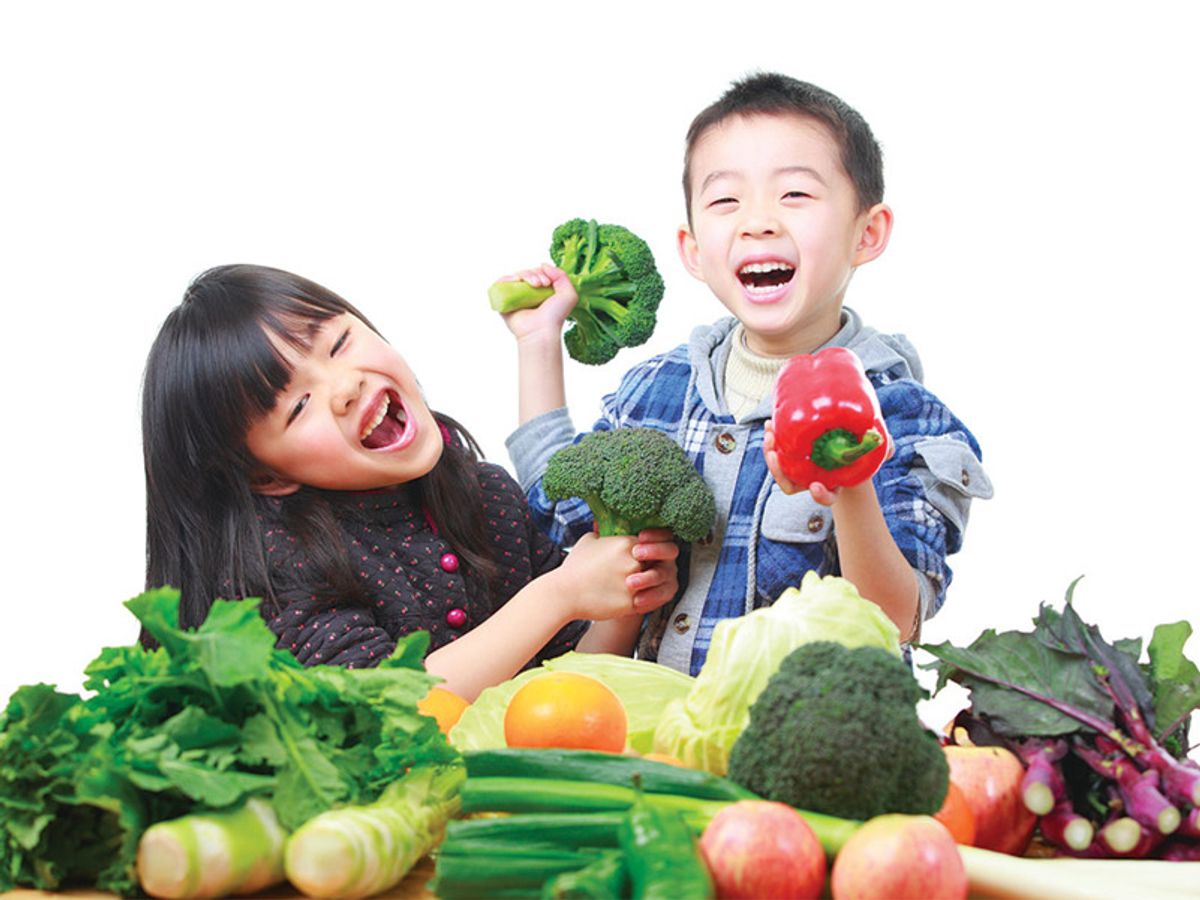
Children need to eat an average of 2 servings of vegetables/tubers and 2 servings of fruit/ripe fruit per day. Illustration photo
Controlling sugar intake in the diet not only helps children avoid the risk of overweight and metabolic disorders but also prevents chronic diseases from a young age. Parents should prioritize natural food sources over sweets or bottled sugary drinks.