Minister Dao Hong Lan Outlines 4 Strategic Priorities for Amending the Food Safety Law
The Ministry of Health focuses on 4 pillars: unified management, rigorous post-market inspection, health-risk-based management, and a national digital database for the new Food Safety Law.

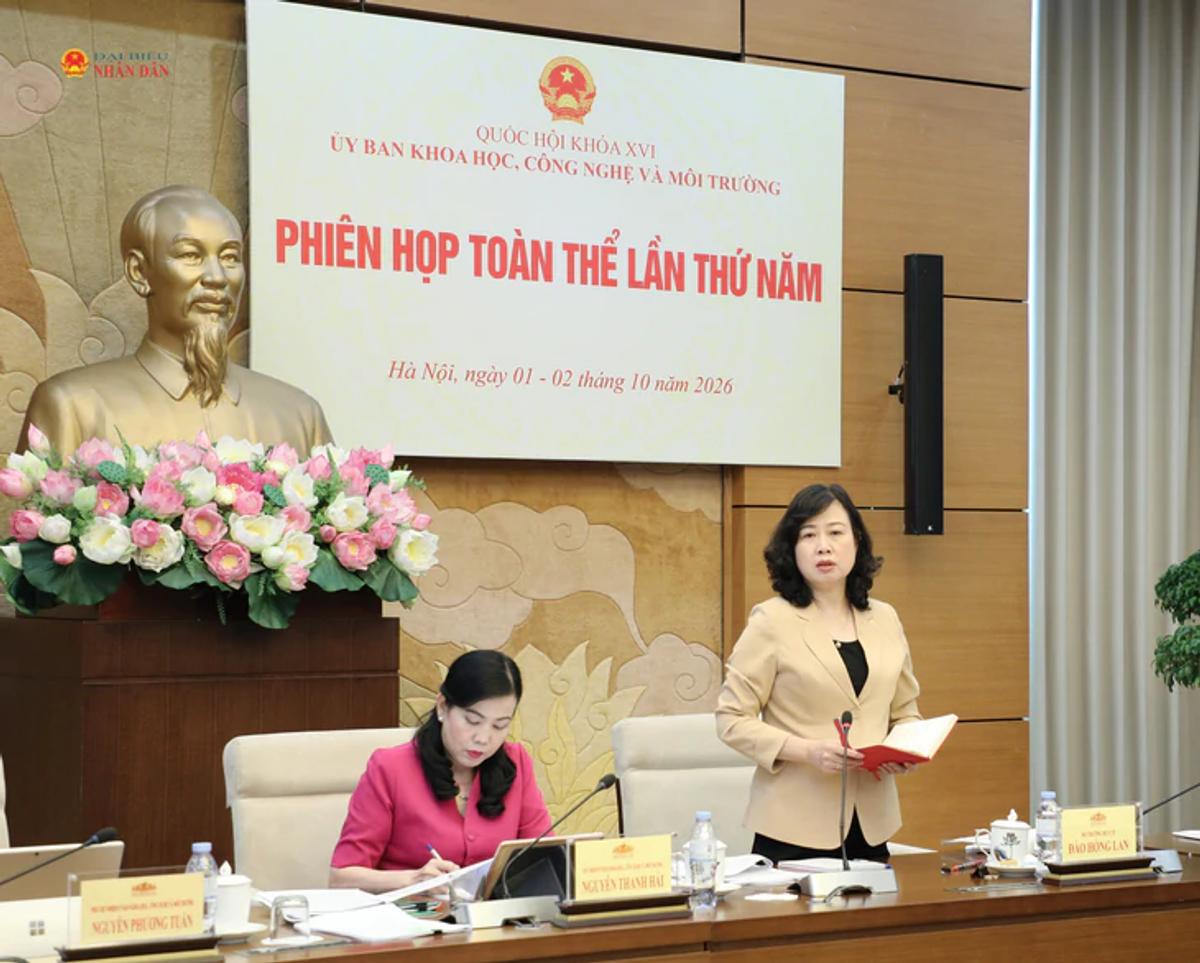
On October 1st, the Committee for Science, Technology and Environment (ST&E) held its fifth session to review the draft amendment of the Food Safety Law. This marks a critical step to update the legal framework after 15 years of implementation of the 2010 Food Safety Law, specifically addressing digital transformation and risks across the food supply chain.

Speaking at the meeting, Chairman of the ST&E Committee Nguyen Thanh Hai emphasized the necessity of transitioning from a heavy pre-check administrative model to a modern, effective post-market inspection model. Key focus areas include institutionalizing Party policies, developing a national digital data infrastructure, and reducing administrative procedures to lower compliance costs for businesses.

Deputy Minister of Health Do Xuan Tuyen stated that the new draft has been refined to 74 articles, prioritizing the unification of state management on food safety from central to local levels, with the Ministry of Health serving as the lead agency. The draft specifically addresses online business operations, e-commerce, and food safety compliance for online food delivery services.
A key highlight of the draft is the establishment of a National Food Safety Data Information System. This system will facilitate end-to-end tracking of the food supply chain—from production, cultivation, and processing to distribution and consumption—enabling authorities to manage risks more effectively rather than relying solely on administrative oversight.

During the Q&A session, Minister of Health Dao Hong Lan affirmed that the drafting agency has incorporated feedback from over 60 consultation meetings. The four core pillars are: unified management with clear jurisdictional boundaries; shifting from administrative risk management to health-risk-based management; strengthening post-market inspection; and diversifying actual inspection methods.

Experts and delegates also proposed clarifying the civil liability of e-commerce platform owners when food safety incidents occur. Furthermore, mechanisms for resolving testing disputes and food recall policies based on the severity of non-compliance need to be explicitly defined to ensure maximum feasibility.