National Assembly Delegate: Clarifying Responsibilities in Food Safety Management, Preventing Automatic Attribution to the Health Sector
National Assembly Delegate Pham Thu Xanh proposes amending the Food Safety Law to strengthen post-market inspections, tighten online advertising oversight, and clarify cross-sector management responsibilities.

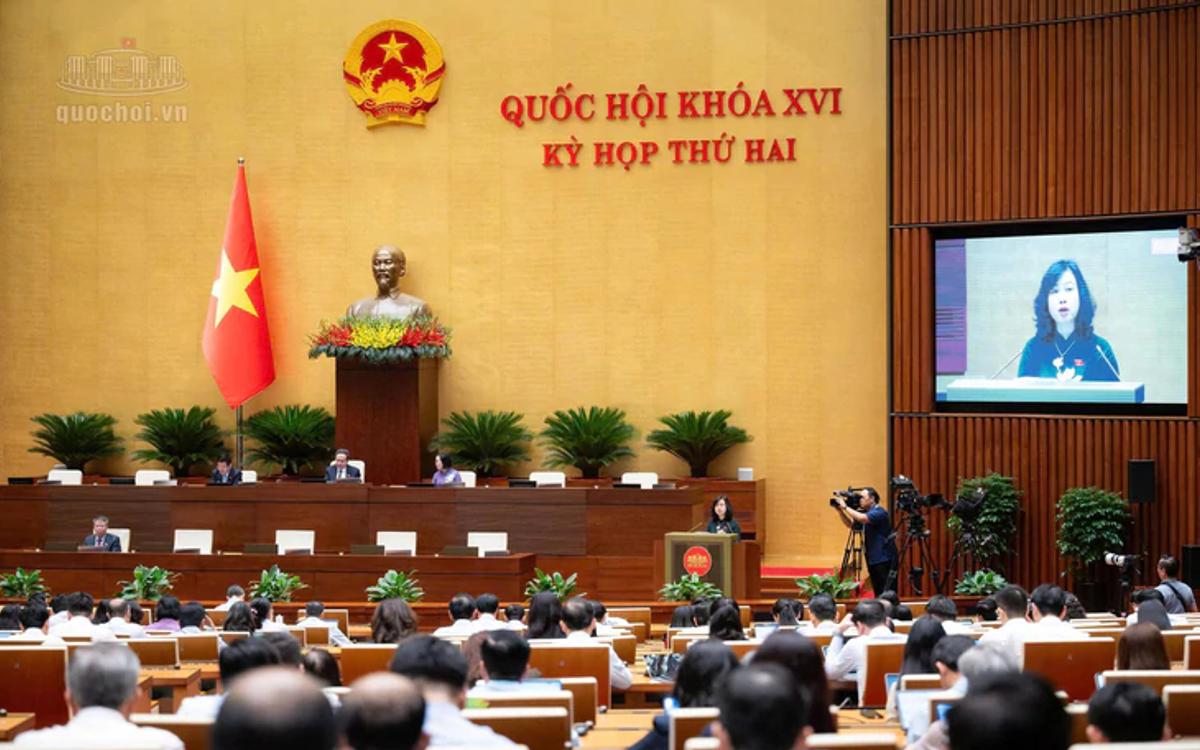
On the afternoon of October 24, during a group discussion on the draft Law on Food Safety (amended), National Assembly Delegate Pham Thu Xanh (Hai Phong Delegation) emphasized the importance of strengthening post-market inspections, tightening oversight of advertisements on digital platforms, and clearly delineating management responsibilities among ministries and sectors.

The delegate affirmed the necessity of amending the Food Safety Law as current management practices have revealed significant shortcomings. Existing gaps include self-declaration mechanisms being exploited, post-market inspection mechanisms failing to detect violations early, and fragmented responsibilities among agencies. The delegate cited the case of 573 fake milk powder labels produced by Rance Pharma and Hacofood Group, which generated nearly 500 billion VND in revenue, as a warning regarding limitations in traceability.

As for solutions, the delegate proposed amending Article 57 to require periodic sampling plans based on risk categories, conducting unannounced post-market inspections upon warning signs, and publicly disclosing handling results. Regarding online advertising, the delegate proposed amending Articles 13 and 61 to compel advertisers, influencers (KOLs), and e-commerce platforms to be responsible for maintaining data trails and promptly removing non-compliant content.

Delegate Pham Thu Xanh supported identifying the Ministry of Health as the unified focal point for state management of food safety (Article 63), but emphasized that this role must come with actual coordination power. Specifically, the delegate stressed: 'A unified focal point does not mean the Ministry of Health does everything, nor does it mean that all food poisoning incidents are automatically the responsibility of the health sector.' Ministries, sectors, and local authorities must fulfill their responsibilities within their assigned domains and jurisdictions.
Additionally, the delegate suggested enhancing laboratory testing capacity, encouraging the application of GHP, HACCP, and ISO 22000 standards, and establishing a roadmap for law implementation linked to digital infrastructure, budget, and human resource training. Administrative reform must go hand-in-hand with the goal of protecting public health and creating favorable conditions for legitimate businesses to operate.