Draft Law on Food Safety (Amended): Tightening e-commerce regulation and clarifying state management responsibilities
The National Assembly discusses the draft Law on Food Safety (Amended) to improve management mechanisms, especially in e-commerce and state accountability.
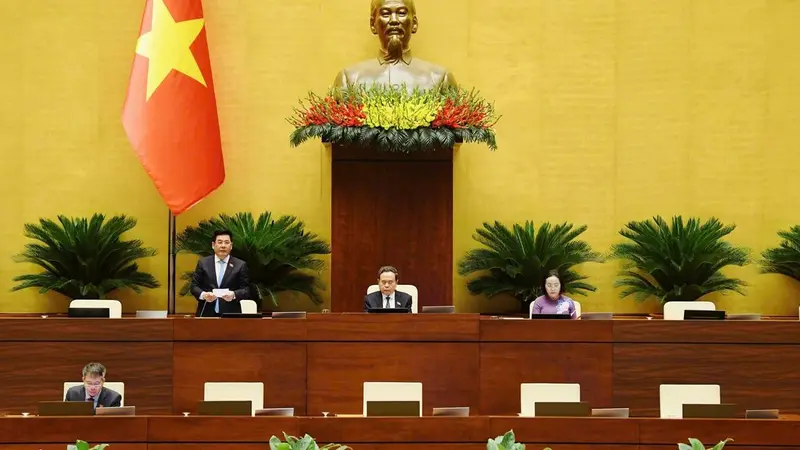
On the morning of October 24, during the 2nd session of the 16th National Assembly, Minister of Health Dao Hong Lan presented the draft Law on Food Safety (Amended). After over 15 years of implementation, the current law has revealed various shortcomings, such as fragmented management models, lack of synchronized national data, and significant legal gaps regarding food business activities on e-commerce platforms.

The draft law focuses on improving control mechanisms through 9 chapters and 74 articles. A key highlight is the addition of strict regulations for e-commerce platforms. These platforms are now mandated to verify and require sellers to provide full legal documentation, product standard declaration files, and approved advertising content before listing any food products. This initiative aims to prevent unverified food products from reaching consumers.

Regarding administrative structure, the draft identifies the Ministry of Health as the central agency helping the Government unify state management of food safety. Additionally, specialized ministries such as Agriculture and Rural Development, Industry and Trade, and Public Security will fulfill their responsibilities within their respective scopes. Local authorities are also empowered to manage street food, ensuring the principle of a unified contact point paired with ultimate accountability.

Chairman of the Committee for Science, Technology, and Environment Nguyen Thanh Hai emphasized the necessity of modernizing management methods. The Committee supports the transition from uniform management to risk-based management, applying post-market surveillance for low-risk products and prioritized pre-market checks for high-risk ones. However, the review body urged the Government to carefully assess local enforcement capabilities to avoid unnecessary administrative burdens on businesses caused by overlapping regulations or complex procedures.