Food Safety Law Amendments: Businesses Concerned Over Procedures and Local Authorities Face Management Challenges
A conference on the draft amended Food Safety Law in Ho Chi Minh City highlights concerns regarding administrative burdens for businesses and management hurdles for local street food vendors.
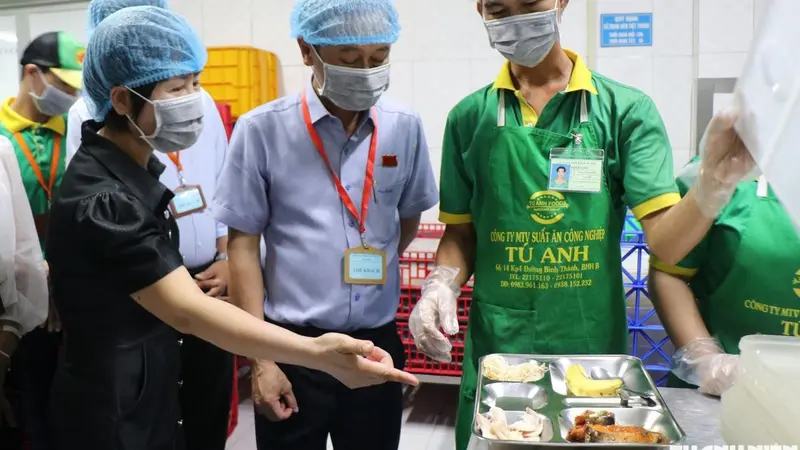
On the afternoon of September 30, the Ho Chi Minh City National Assembly Delegation held a conference to gather feedback on the draft amended Law on Food Safety. At the meeting, business representatives and local government officials expressed various perspectives on the feasibility and practical implications of the proposed legislation.
Ms. Tran Thi Phuong Hoa, Vice Chair of the Food and Foodstuff Association of Ho Chi Minh City (FFA), expressed support for the shift toward risk-based management, strengthening post-market inspections, and improving traceability. However, she emphasized that procedures for product announcement, registration, and laboratory testing must be reviewed to ensure transparency, simplicity, and practical effectiveness. She argued that if resources are concentrated on reviewing documents while the actual circulation of food remains under-supervised, the safety goals will be difficult to achieve.
The FFA representative raised concerns regarding the criteria for identifying food groups requiring registration of product announcements under Point a, Clause 2, Article 46. Ms. Hoa urged the drafting committee to clarify the list of mandatory registration products and include clear definitions for nutritional products for special diets to prevent inconsistent application. Furthermore, the Association recommended abolishing the 5-year periodic renewal procedure and proposed classifying food into three risk levels—high, medium, and low—instead of the two proposed in the draft.
From a local management perspective, Ms. Phan Thi Diem, Head of the Culture and Social Affairs Department of Tan Tao Ward, highlighted the difficulties in requiring street food vendors to retain invoices and documents for raw material origins. She noted that for small stalls purchasing from traditional markets, this is highly impractical. Therefore, she proposed regulations based on business scale to ensure feasibility for both vendors and local authorities.
Furthermore, personnel constraints at the ward level remain a significant hurdle. Both Ms. Diem and Mr. Nguyen Phuong Phi (Ben Thanh Ward) reflected on the lack of technical expertise for conducting food safety inspections. They requested that licensing authorities share database information on registered businesses and production facilities to assist local authorities in monitoring and post-market oversight. The HCMC National Assembly Delegation confirmed that all feedback has been recorded to be reported to the National Assembly Standing Committee in the near future.