Inspecting Ho Chi Minh City Wholesale Markets: Gaps in Food Safety Control
The HCMC People's Council inspection identifies challenges in food safety control at three major wholesale markets and risks posed by spontaneous trading spots.
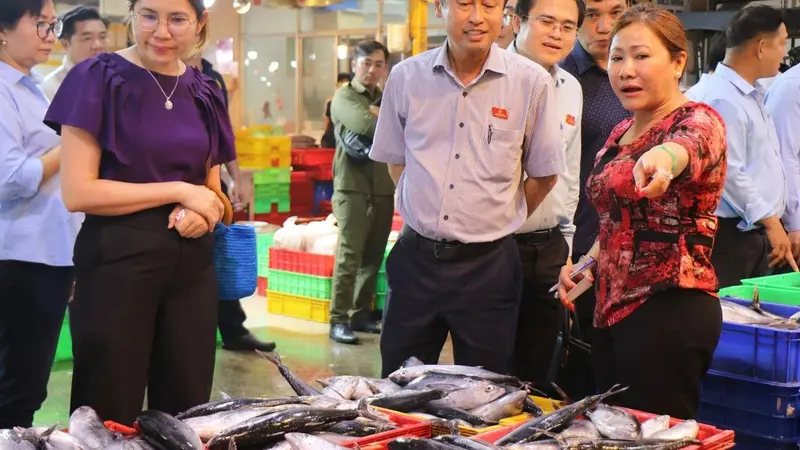
Ho Chi Minh City currently hosts three major wholesale markets: Binh Dien, Hoc Mon, and Thu Duc, which serve as critical food supply hubs with over 6,000 tons of goods passing through daily. Inspection results from the Standing Committee of the HCMC People's Council in August 2026 reveal that while markets have made efforts in documentation checks and sampling, significant gaps remain in source control and monitoring of spontaneous trading activities.
At Binh Dien Wholesale Market, spanning 36.3 hectares with over 1,400 vendors, management reports acknowledge that goods from provinces are not fully controlled at the source. A major challenge is the time lag between distribution speed and lab testing results. Quantitative testing typically takes 4-5 days, while fresh products leave the market much faster, making it difficult to hold shipments pending test results.
Data from the HCMC Food Safety Department indicates that in recent monitoring periods, the rate of non-compliant agricultural, forestry, and aquatic samples was approximately 8.95%. Issues regarding traceability data, where origin information stops at the provincial level rather than detailing specific farms or batches, pose significant obstacles to quality management.
Another pressing issue is the presence of spontaneous trading spots around wholesale markets. Around Hoc Mon market, there are nearly 300 trading points, many of which are unlicensed. Cao Thanh Binh, Head of the Culture and Social Affairs Committee of the HCMC People's Council, emphasized that this situation creates an unfair business environment and poses high risks of environmental pollution due to untreated processing wastewater.
Regarding resources, the pressure on management teams is immense. Hoc Mon market operates 24/7, yet the testing team consists of only three staff members, lacking sufficient expertise in food technology. Furthermore, the lack of synchronized data between sectors and aging technical infrastructure in areas surrounding the markets continue to hinder the effective enforcement of national technical regulations.
HCMC People's Council Vice Chairman Huynh Thanh Nhan has demanded that management be strictly connected from production sites and slaughterhouses to intermediate trading spots. Management responsibilities must be clearly defined, and difficulties regarding personnel or infrastructure cannot be used as excuses for laxity in ensuring food safety for consumers.