4 'Traps' on Food Packaging That Mislead Consumers
How to identify marketing tactics on food labels to avoid misconceptions about actual nutritional value.
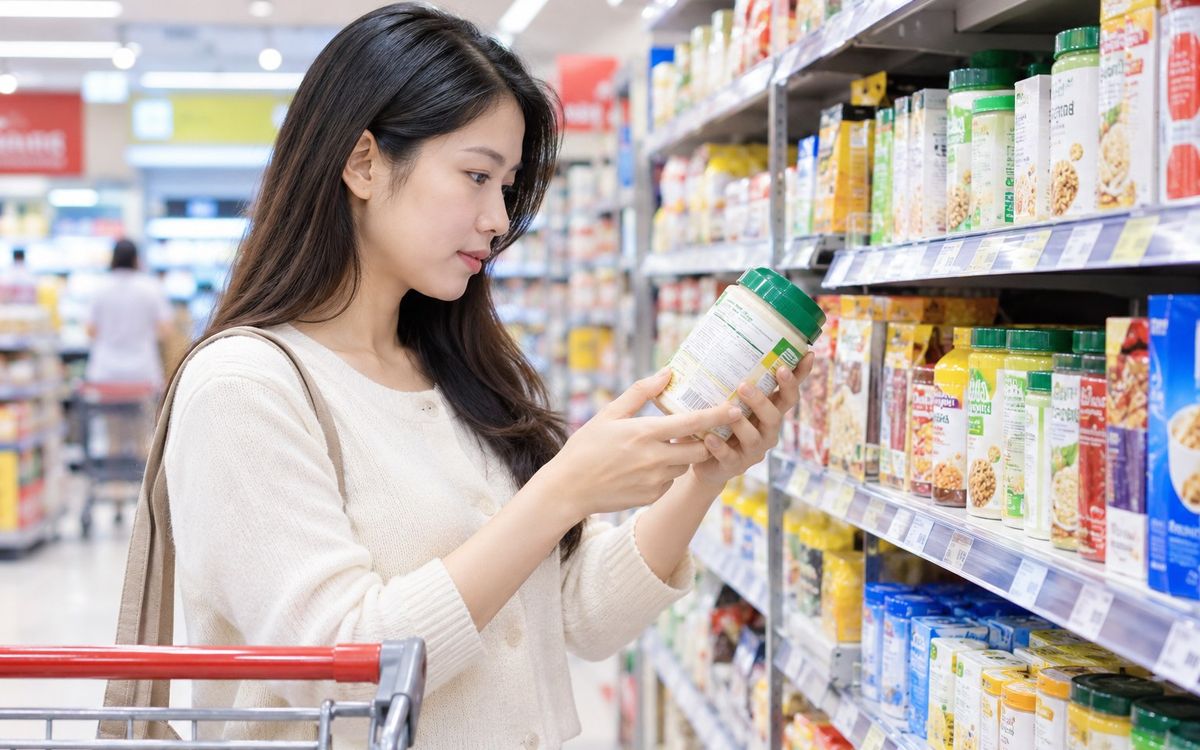
Appealing information on food packaging can easily lead to misconceptions about the true nutritional value. Distinguishing clearly between marketing claims and the nutritional fact label is a necessary skill for consumers to make informed health choices.
When shopping at supermarkets, many consumers are attracted by phrases like '100% natural', 'no added sugar', or '0% fat' alongside images of fresh fruit. While these messages can be helpful, they are often designed to highlight positive attributes, creating a 'health halo effect' that leads buyers to mistakenly assume the entire product is healthy.
For instance, a 'low-fat' cookie may still contain very high levels of sugar or refined starch. Similarly, gluten-free food does not necessarily mean it has lower energy content. Therefore, instead of relying solely on a prominent claim, consumers should simultaneously consider indicators such as energy, protein, carbohydrates, fat, total sugars, and sodium.
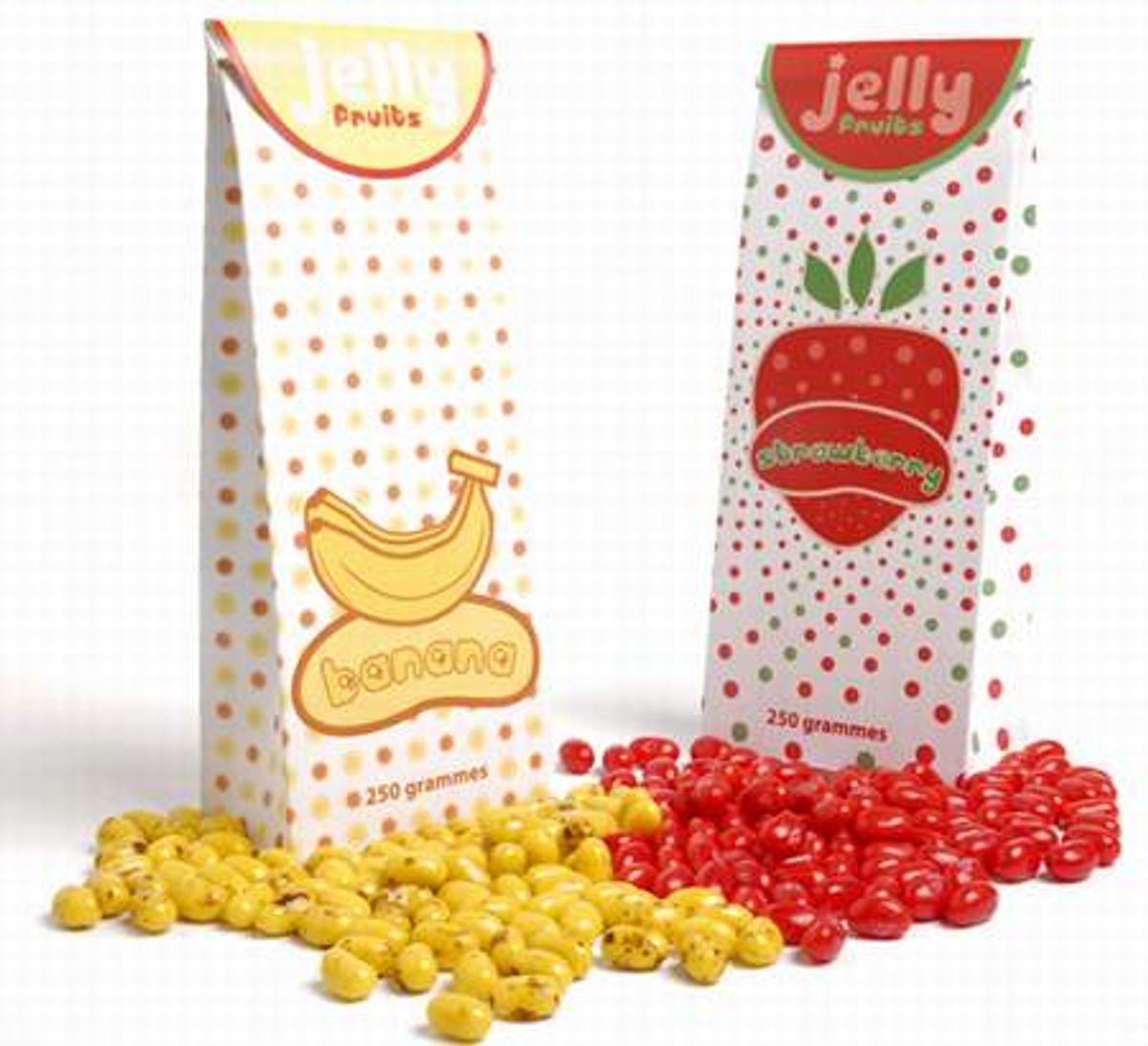
Images of strawberries, carrots, or nuts on packaging can also be misleading. Phrases like 'made with real fruit' often lack transparency regarding the actual percentage of ingredients. Gummy candies with added fruit juice may still be high in sugar and very low in fiber. Furthermore, terms like 'natural' or 'lightly sweetened' are often marketing-driven rather than uniform legal definitions, as labeling regulations can vary depending on the market and country.
In Vietnam, consumers should note that 'no added sugar' does not mean the product contains no sugar at all. The product may still contain natural sugars from dairy or fruit. Diabetics, those with hypertension, or those struggling with weight management need to carefully check the ingredients list and actual serving sizes to build an appropriate diet, instead of relying solely on advertising messages on the front of the package.
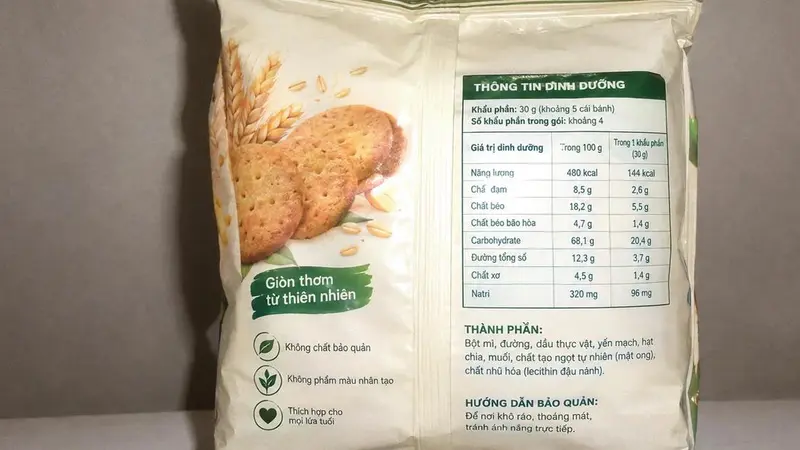
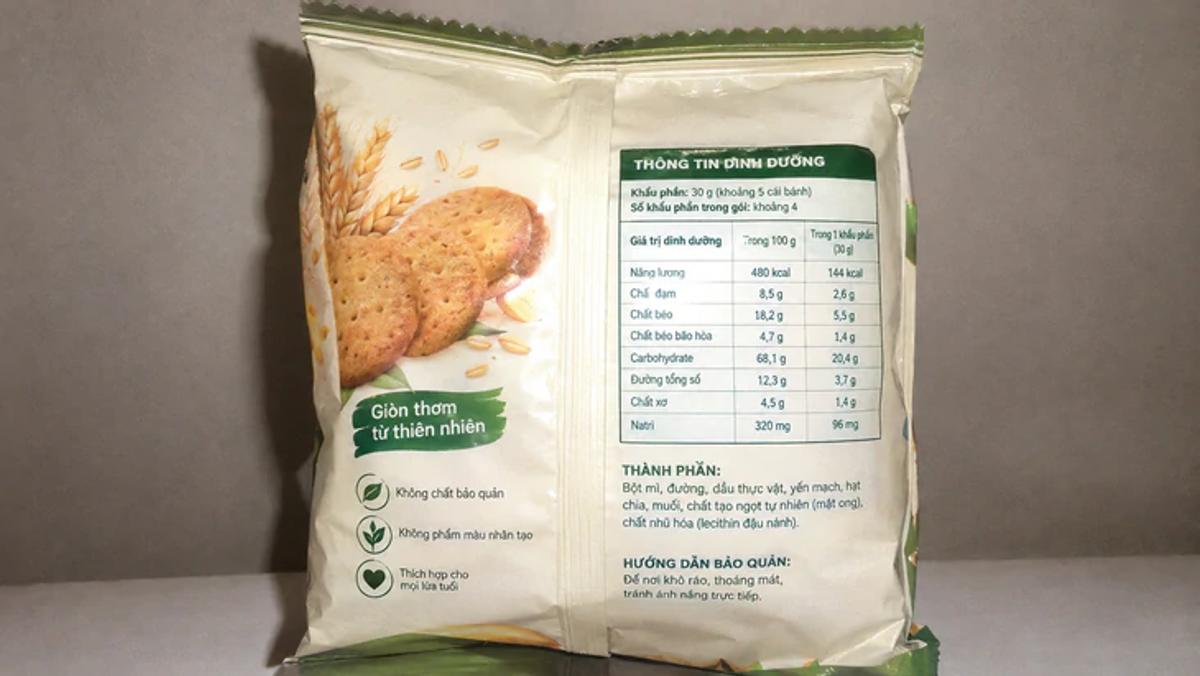
Another common mistake is overlooking the serving size used as a basis for nutritional values. Nutrition labels often list values per 100g, 100ml, or per serving. If a pack of crackers contains two servings, eating the whole package means consuming double the energy stated on the label. Consumers should compare nutritional values using the same unit of measure to make accurate comparisons between products.
Under Circular 30/2026/TT-BYT of the Ministry of Health, regulations on nutritional labeling are increasingly comprehensive; however, some food groups remain outside the scope of this regulation. Therefore, forming the habit of checking the ingredient list, reviewing the nutrition table, and calculating actual intake is the best way to avoid marketing 'traps' and ensure the selection of safe and healthy food for oneself and family.