Food Safety Warning: Alarming Conditions at Ho Chi Minh City Wholesale Markets
Field surveys at Binh Dien, Thu Duc, and Hoc Mon wholesale markets reveal fresh produce is frequently sold near waste, posing severe contamination risks.
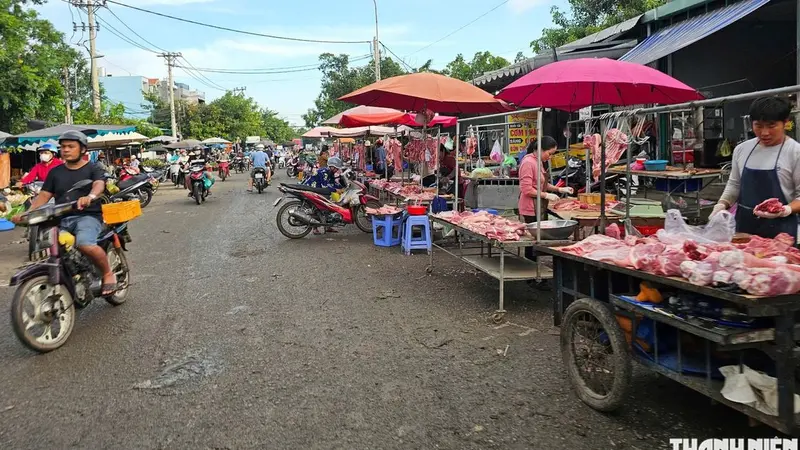
A field survey conducted from August 24 to the end of August 2026 around the Binh Dien, Thu Duc, and Hoc Mon wholesale markets in Ho Chi Minh City has revealed alarming conditions regarding food safety. Many fresh products, including vegetables, meat, and seafood, are sold directly on the streets under unsanitary conditions, adjacent to wastewater, mud, and organic waste.
The situation is further complicated by the existence of hundreds of spontaneous selling points outside the management scope of market companies. In these areas, the origin of goods is difficult to verify, storage conditions are inadequate, and despite continuous efforts by authorities, these 'informal markets' persist as soon as patrols depart.
At Binh Dien market, along Quan Trong Linh street, fresh food is placed right on the road where trucks frequently pass. Similarly, around Thu Duc wholesale market, spontaneous business areas discharge waste directly onto the road, forming foul-smelling stagnant puddles. The Thu Duc Agricultural Wholesale Market Management and Trading Joint Stock Company admits that goods in these areas are completely outside the scope of food safety management.
In the Hoc Mon wholesale market area, approximately 147 spontaneous business points are in operation, causing significant urban blight and environmental pollution on Nguyen Thi Soc street. Residents living nearby expressed frustration, stating that the stench from rotting vegetables and wastewater has directly impacted the health of their families, leading to frequent respiratory ailments.
In August 2026, a supervisory delegation from the Ho Chi Minh City People's Council, led by Mr. Huynh Thanh Nhan, conducted an inspection of food safety management. Results indicate that while formal wholesale markets have testing procedures, source traceability remains limited due to the long duration of quantitative testing. Authorities are currently proposing the development of a more integrated process, from slaughtering to the dining table, to close current food safety loopholes.