Can Eggs Completely Replace Beef and Pork in Your Daily Diet?
Explore the nutritional value of eggs compared to red meat and essential food safety tips from the National Institute of Nutrition.
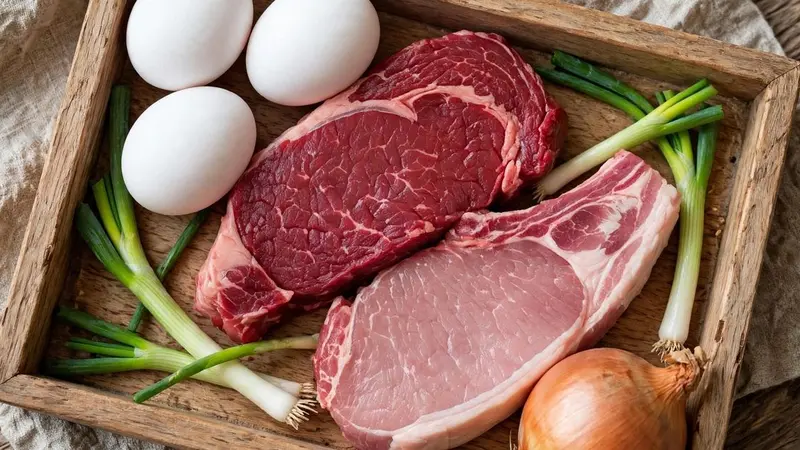
According to Dr. Bui Thi Thuy from the National Institute of Nutrition, one 50-gram egg provides 6 to 7 grams of high-quality protein. Furthermore, eggs are a rich source of essential amino acids, vitamin B12, vitamin A, choline, and several vital minerals for the body.
Although theoretically three eggs provide an equivalent amount of protein to 100 grams of lean meat, eggs cannot completely replace beef or pork in terms of overall nutritional composition. Red meat is an abundant source of heme iron and zinc, which are not adequately supplied by eggs alone.
The following table compares the nutritional components of eggs and popular meats (data provided by the National Institute of Nutrition):
| Component | 1 Egg (50g) | 100g Lean Beef | 100g Lean Pork |
| :--- | :--- | :--- | :--- |
| Protein | 6 - 7g | 20 - 22g | 20 - 22g |
| Energy | 70 - 75 kcal | 120 - 170 kcal | 120 - 160 kcal |
| Cholesterol | 180 - 200 mg | 60 - 90 mg | 60 - 80 mg |
| Iron | 0.9 mg | 2 - 3 mg | 0.8 - 1.2 mg |
Dr. Thuy recommends that individuals maintain a diverse diet by incorporating eggs, fish, lean meat, dairy, and legumes instead of relying on a single protein source. For healthy adults, consuming one egg per day is considered safe, provided it is prepared healthily—such as boiling or steaming—and the total intake of saturated fat is managed.
Regarding food safety, many people prefer soft-boiled or 'runny' eggs. However, experts warn that while undercooked yolks retain heat-sensitive vitamins like A, E, and carotenoids, they also pose a potential risk of Salmonella bacterial contamination.
This bacterium can penetrate the yolk while the egg is still inside the hen or infect it from the exterior shell. To ensure food safety, the National Institute of Nutrition strongly recommends cooking both the whites and yolks thoroughly to eliminate the risk of foodborne illness.