Nutrition Label Guide: Smart Strategies for Healthy Food Choices
Discover how to accurately interpret nutrition labels and ingredient lists, helping you scientifically control the quality of food you consume every day.
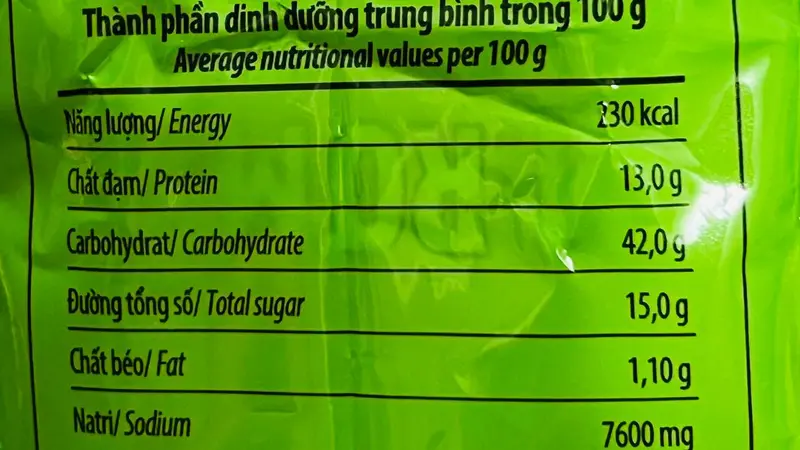
Understanding nutrition labels is an essential skill for building a healthy diet. Below are detailed guidelines to help you decode key product parameters.
Start with serving size information: The label indicates the serving size and the total number of servings per package. Note that calorie and nutrient values are calculated based on a single serving, not the entire package. If you consume more than one serving, remember to multiply these values accordingly.
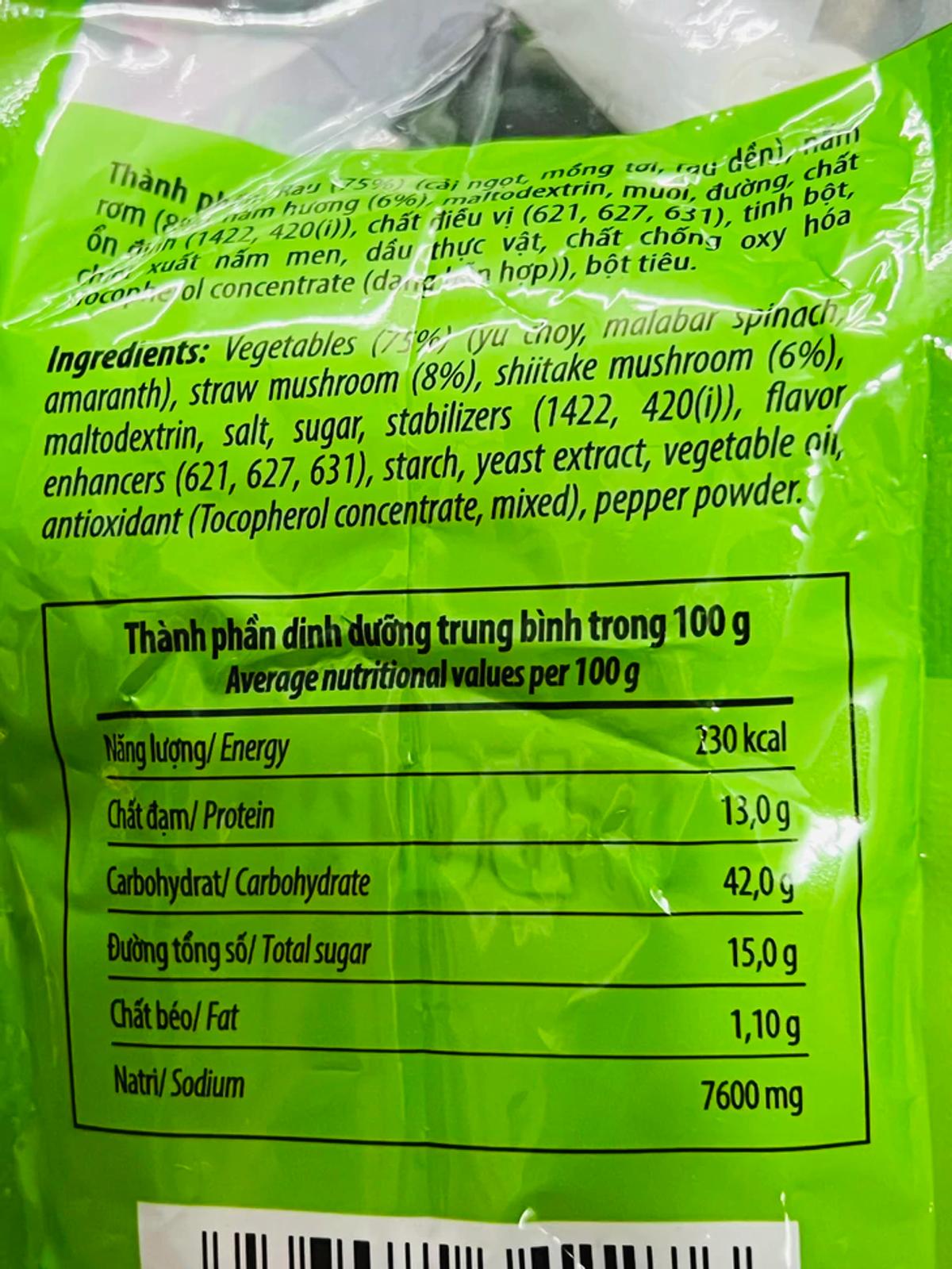
Interpreting nutrition facts is a crucial step in making informed food choices. Illustration: Hoang Nam.
Secondly, limit intake of specific nutrients. When assessing fats, focus on saturated and trans fats. Ideally, minimize trans fats entirely. Be aware that even if a label says "0g" of trans fats, check the ingredient list for "partially hydrogenated oils." Additionally, keep an eye on total sugar intake, including natural and added sugars, along with sodium levels.
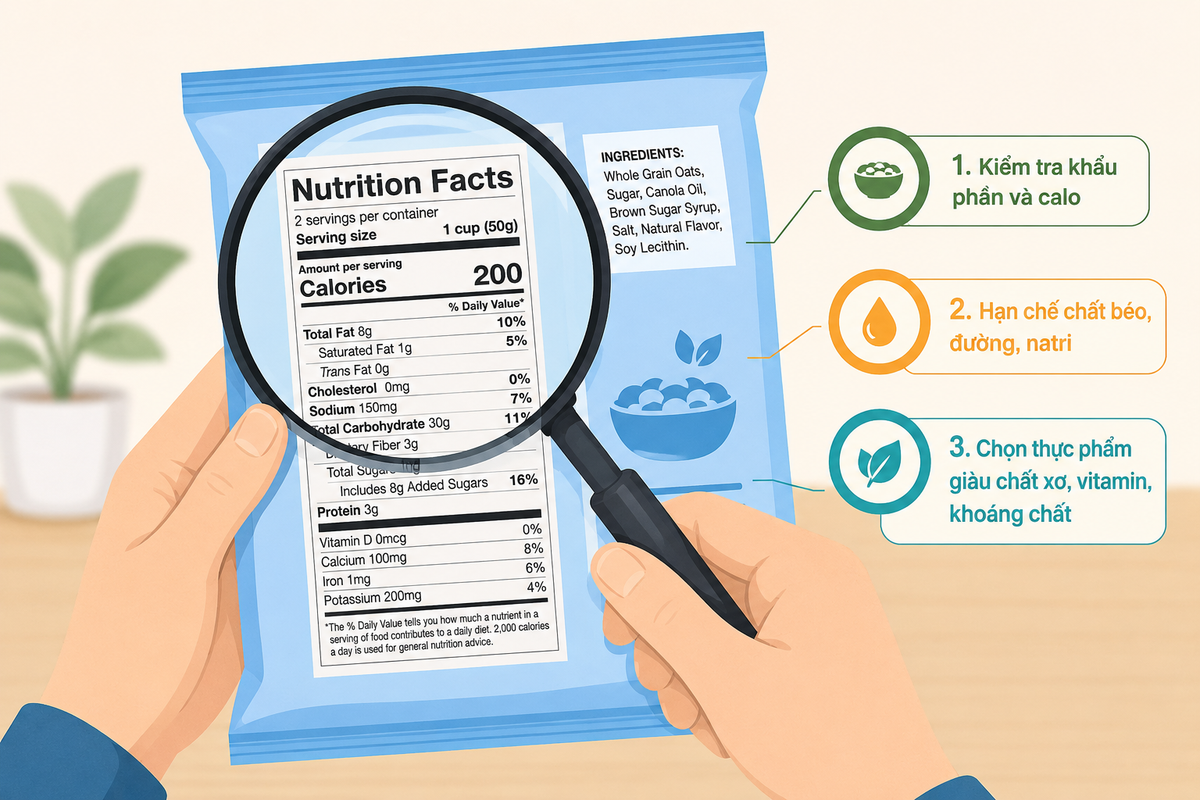
Building the habit of reading nutrition labels helps maintain long-term health.
Besides reducing harmful elements, prioritize adding essential nutrients like fiber, calcium, iron, potassium, and vitamin D. Fiber plays a key role in satiety and helps manage cholesterol levels. A common recommendation is approximately 14g of fiber per 1,000 calories consumed.
Understand the Daily Value (%DV): This parameter shows how much a serving contributes to daily nutritional needs based on a 2,000-calorie diet. Use %DV to compare products: choose lower %DV for nutrients to limit (saturated fat, sodium) and higher %DV for nutrients to increase (fiber, vitamins).

Finally, master the ingredient list. By the descending weight rule, the ingredients listed first have the highest concentration. Be cautious of sugar aliases like dextrose, fructose, sucrose, or maltose. Regarding sodium, do not rely solely on salt; look for additives such as monosodium glutamate (MSG) or sodium benzoate.

Maintaining the habit of checking labels, especially for snacks, sweets, or instant noodles, will help parents protect their children from potential risks of excess sugar, salt, and fat.