Two Foods Requiring Special Caution When Stored in Aluminum Foil
Guidelines for safe food storage using aluminum foil, focusing on baked potatoes and acidic foods to prevent poisoning risks and chemical reactions.
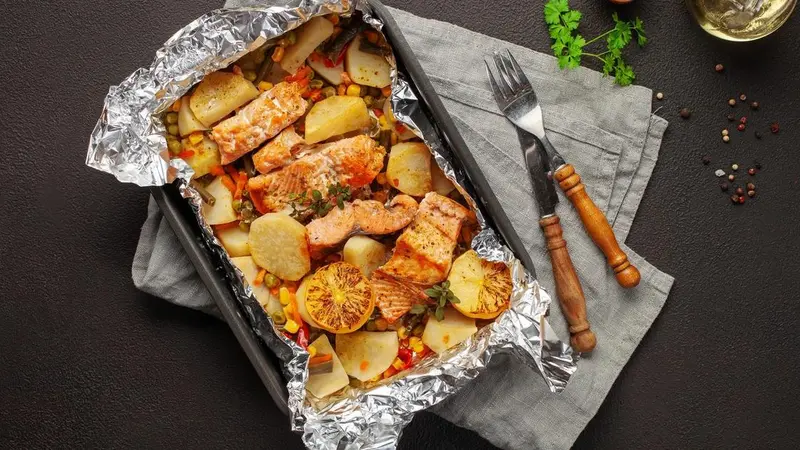
Aluminum foil is a common kitchen staple, often used for wrapping, grilling, and preserving food. However, food safety experts suggest that the risk does not lie in the material itself, but rather in the type of food, cooling procedures, and storage duration. In particular, there are two food groups that consumers should be cautious about when using aluminum foil.
The first group is baked potatoes. The latent risk does not stem from general aluminum foil use but arises when baked potatoes are wrapped tightly and left at room temperature for too long. Potatoes can carry spores of the bacteria Clostridium botulinum from the soil, which can survive the baking process. Wrapping them tightly in foil creates an oxygen-deprived environment inside, which encourages these spores to germinate and produce botulinum toxin if kept at ambient temperatures.

The United States Department of Agriculture (USDA) has confirmed that baked potatoes wrapped in foil have been linked to various serious botulism poisoning cases, notably an incident in Texas in 1997 that caused 17 people to fall ill. Botulinum toxin is extremely dangerous because it does not alter the food's smell, taste, or appearance, and even a tiny amount can cause muscle paralysis or respiratory failure. The U.S. CDC emphasizes that one cannot detect contaminated food through sensory perception.

The second group requiring caution includes acidic foods such as tomatoes, lemons, oranges, and other citrus fruits. When in direct contact with aluminum foil for an extended period, acidic components can react with the aluminum. While this is primarily considered a food quality issue—potentially causing discoloration or a metallic taste—rather than an acute poisoning risk, expert Vanessa Coffman recommends using glass or plastic containers for storage instead of aluminum foil.

A more critical issue is the rate of cooling food. Dr. Vanessa Coffman, Director of the Stop Foodborne Illness coalition, notes that leftovers should be cooled and placed in the refrigerator within two hours of cooking. Leaving food in the 4-60°C temperature danger zone for too long allows bacteria to proliferate. It is advised not to tightly wrap hot food in foil before placing it in the fridge, as the foil layer can trap heat and slow down the dissipation process.
For optimal storage, divide food into smaller portions and use shallow containers to help heat escape faster. Avoid crowding too much hot food into the refrigerator at once to maintain stable internal temperatures, thereby protecting other perishable items. Aluminum foil remains a useful tool if used correctly and scientifically.